Thursday, April 16, 2015

Forgive or Be Forgiven Satan Forgiveness and Repentance

Forgive or Be Forgiven Satan Forgiveness and Repentance

blog post by Mary Katherine May
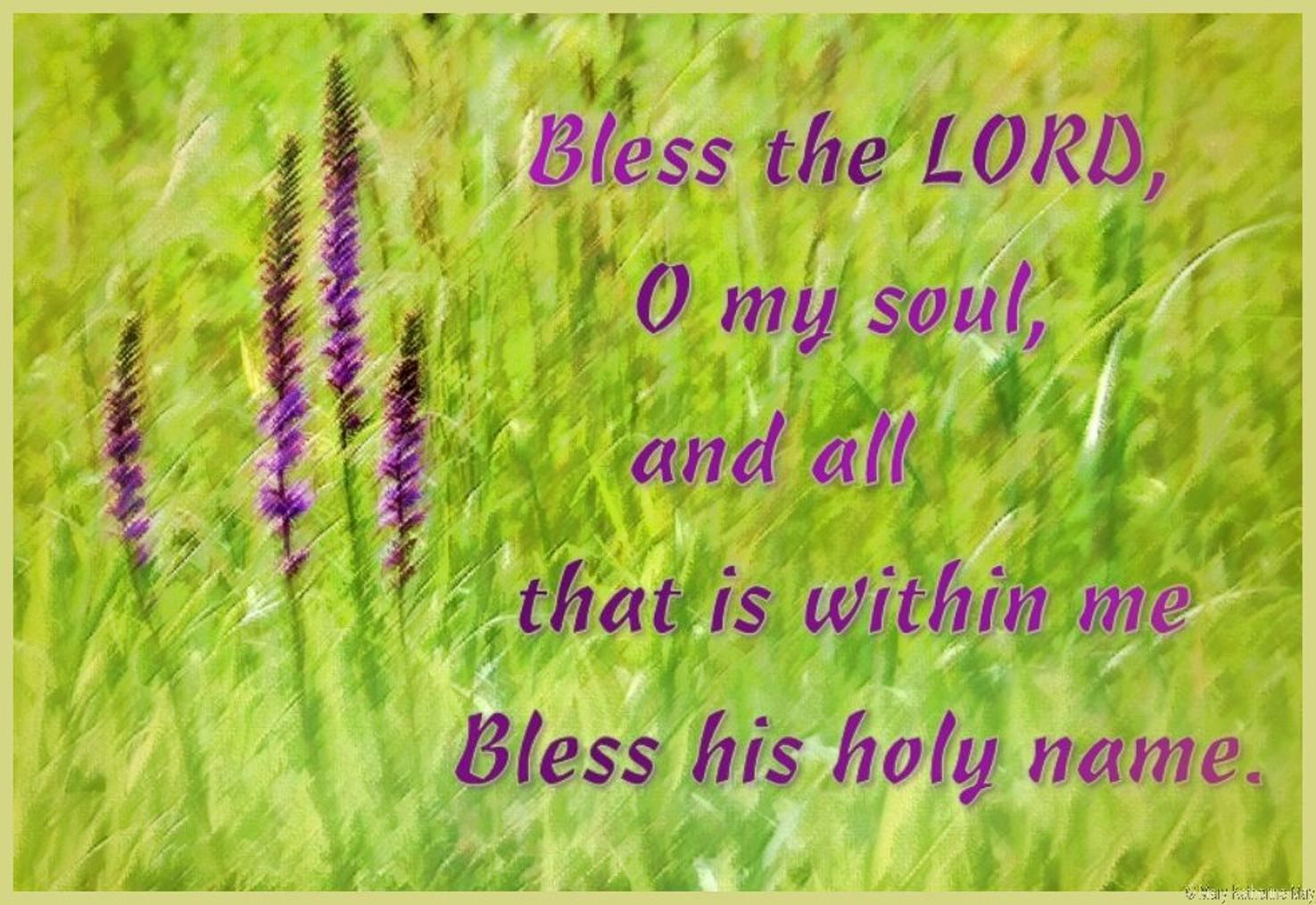
Psalm 103:1
One of the most cruel punishments a person can impose upon their own self is unresolved conflict.  Sickness both mental and physical is wrought in the body.  Relationships with others are affected, even ended over something that includes involvement with another person, and that person is not them.

Bible teaching for Christians is clear that the issue must be brought to a close.  Do not go to sleep angry but repent and forgive those with whom you have disagreement.  Go to the person and deal with the problem.  If that doesn’t work, go to the church, etc.  Be loving because love overlooks a multitude of sins.

Here is the problem: Human resolution on worldly terms involves all parties involved.  What then is to be done if only one person seeks to end the conflict?  What is to be done if the conflict involves someone who is dead or whose whereabouts are unknown?  What then?

Caution on dealing with conflict is necessary because so often Christians believe they are acting in a Godly way when instead they are using  human, or worldly principles.

Please recall that the soul filled with the peace of God is not the ultimate goal, but the normal way in which Christians are to conduct their lives.  Without a doubt, handling unresolved conflict for which one-sided resolution is possible is really tough—extremely tough.  Yet as Scripture says, with God all things are possible, even this.

Conflict Resolution for Christians is mandatory.
When conflict resolution is only humanly possible on one side 
the other side of the resolution is occupied by God.
Ephesians 6: 12. For we do not wrestle against flesh and blood, but against the rulers, against the authorities, against the cosmic powers over this present darkness, against the spiritual forces of evil in the heavenly places.
 The first step, then, is to acknowledge exactly who is at the core of the conflict and that Who is Satan working concurrently with our free will.  Conflict like this is not the same as going through a time of testing which Scripture tells us is to be endured, the ultimate goal being strengthened faith. 

Pray as Christ taught in Matthew 6: …but deliver us from evil.  

Give marching orders to Satan by declaring by the power inherent in the name of Jesus Christ, our risen Savior, that he and all of his demons are banished from your space right now and for all time.

Whether or not the other person is involved, you have the power through Jesus Christ to forgive.  Recall that at the time of the most terrible sin, that of murdering the Messiah on the cross at Golgotha, our Lord pray, “Father forgive them, for they know not what they do.”  That forgiving power, at a time when forgiving seems impossible, comes from the Lord.  It is yours to claim. 

When forgiveness seems impossible then allow obedience carry you through to being able to truly forgive.  Jesus Christ told us that we must forgive and so we have to do it.  If for no other reason than this, out of obedience declare in faith, I forgive you.”  Each time the pain of the hurt comes to mind repeat, “I forgive you.  Through the power of the Name of Jesus Christ, I forgive you.”   From personal experience I know that this brings real forgiveness, and with forgiveness comes closure of painful past experiences.  This allows us to gain positively from a negative event.  

Q: Was I  too trusting because I didn’t base my trust on the fruits produced by this person?  
A: From this time on I will therefore be loving and compassionate while being cautious in trusting until there is merit to do so.  

Q: Did I place myself in a position where I was vulnerable? 
A: From this time on I will base what I do and where I go on biblical principles.  I will not go alone where I may be in harms way.  

Q: Did I say words that should not have been spoken which were responded to in like manner?  
A: In the future I will speak as Scripture teaches me to speak.  

Q: Why should I suffer when I did nothing to cause this problem? 
A: I will now live on the basis that when I have no responsibility for the harm caused I will not blame myself for the hurt, but instead recognize that people who offensively harm others reap eternal consequences on only themselves.  Justice will always be served even though not now.  I have the power to forgive even under these circumstances because without forgiving I am hurting myself. The peace of my soul in Christ will not be sacrificed for the sin of someone else.

The other side of forgiveness is the equally import act of repentance.  There are times when so much time has past that the person to whom we should go to repent cannot be reached, or as with forgiveness the person is dead.  In this case we must go before God with grief for our sin to confess and repent, knowing that within our human capability we have done all we can to remedy what happened.  It also happens that we may go sincerely asking to be forgiven and our request will be denied, and then we must believe that we have done what Scripture has commanded, entrusting final resolution to God.

Not that long ago I was in a situation where terrible things were said to me and it was made clear that I was not welcome at a certain church.  Later that same day I contacted the persons involved with the message that I had forgiven them to which I received no response. On my part, however, I had done what Christ told me I should do. My forgiving was sincere.  The hurt continued for some time, though. Each time the memory came into my mind I repeated, I forgive you. Though difficult, I continued to pray for them until I was able to pray with no malice in my heart.  Today I continue to pray for their ministry and my desire is for their ministry to prosper.  I can do it and have done it, and my experience tells me that with God's grace others can do it, too.


In the act of not forgiving and repenting Satan resides.  By not forgiving Satan’s residence in the heart grows from a tiny closet to a gigantic sports stadium the same as the Colosseum in Rome where Christians were sacrificed to wild animals. You are the Christian and Satan is the wild animal eagerly devouring your soul.  Like Daniel, however, you have the power to keep the lions away.

Amen.

Tuesday, April 14, 2015

Simple Thought on Prayer Everyday with Mary May

When the heart is at peace we can hear the voice of God.  

Shoreline of Crystal Lake at Hollingsworth Park
in Robbinsdale, Minnesota.
blog post by Mary Katherine May
quote by God

A lovely spring day today in the Twin Cities of Minneapolis and Saint Paul in Minnesota.  Hollingsworth Park on Crystal Lake is located in Robbsinsdale is a first tier north suburb of Minneapolis on the west side of the Mississippi River.  

As I sat on a bench close to the lake I thought about problems and stresses that seemed overwhelming, wondering on how God could help me handle them.  I soon realized that the problem was not in how to handle my issues but instead all about where my focus was.

God deals with our problems. This is a promise. Dwelling, mulling and chewing over a situation is a sad, useless effort when even before solved we have assurance that a solution is forthcoming. There is no space for the working out, however, when where we are looking is at ourselves when our eyes should be looking up and out. Instead of thinking about ME and what I am going to do, change to looking up at God in praise and thanksgiving and out through eyes filled from a Spirit-filled soul.

How can I hear God when my heart and my are filled with the sound of my own voice saying, "Me Me Me Me ME!!!"?  We have a promise.  God loves us and takes care of us.  Be still and know....  So, shhhhhhhhhhhhh..... Listen!

When the heart is at peace 
we can hear the voice of God.  

Saturday, April 11, 2015

Easter Pascha Greeting Orthodox Christians

Christ is risen from the dead trampling down death by death,
and to those in the tombs bestowing life.
To my brothers and sisters in Christ, 

to whom I extend a greeting of joy in this holy time. I pray that you will keep your peace. Surround and fill yourself with the Spirit of Love from God who is love. 

Remember that words and actions meant to hurt you truly only hurt and have consequences on those those doing the hurting. Hate and anger consume and destroy the soul. When we hate we become our own enemy. Pascha (Easter) comes only after the ultimate act of love. 


Christ is Risen! Indeed He is risen!

Let us honor our Savior by cleansing ourselves of hate and anger and begin anew with reverence by giving God glory and thanks, being consumed with God who is love.

blog post by Mary Katherine May

Friday, April 10, 2015

Hope On There Is an Ultimate Good that Will Triumph Because God Is Love

1 John 4:16. God is love, and he who abides
 in love abides in God, and God in him.
Hope on! There Is an Ultimate Good that Will Triumph! 

blog post by Mary Katherine May

Bible quote source: BibleGateway.org

God Is Love clipart quote created by Mary Katherine May is free to download only for nonprofit use.

What is is the redeeming element when bad and evil events are happening around us every day?  Where are we to go when so many people spew out cruel, hateful words because they have forgotten what it means to treat others as they want to be treated.  So many are concerned about being disrespected while carrying out disrespectful behavior themselves.  

For I am persuaded that neither death nor life, nor angels or principalities nor powers, nor things present nor things to come, nor height nor depth, nor any other created thing, shall be able to separate us from the love of God which is in Christ Jesus our Lord. Romans 8: 38, 39.

Yet there is one hope to which i cling, and that is God, for God is love. (1 John 4:8).  God is love, love is God, and that will never change.  Despite all that may go on around us and however many times we might be attacked we can be confident that love will prevail in the end.  

Does it seem that God has deserted  you because of your circumstances?  That is impossible because God is here, there, and everywhere.  God is always in and of the world that He created.  When God seems so distant it is because we have been so caught up in what is happening that we ourselves feel unconnected.  


Loved with everlasting love, led by grace that love to know;
Gracious Spirit from above, You have taught me it is so!
Oh, this full and perfect peace!  Oh, this transport* all divine!
In a love which cannot cease, I am His, and He is mine.  
Wade Robinson
*transport: an overwhelmingly strong emotion

Jesus said, "...I am with you always, even to the end of the world." (Matthew 28:20b).  Is it so difficult to believe that God is present thought we cannot feel his presence?  We trust that the sun will rise and set, and we trust that the sun is there warming the earth even when blocked by clouds--when we cannot feel or see its rays or light.  It is not different with God.

God is love and that will not change.  Love will prevail and triumph, and  God will bring those who love him into eternity that is only love and where no evil can enter.  And that is truly a wonderful hope to hold in our hearts and minds.


John Greenleaf Whitter, age 29
source: Wikipedia
Yet, in the maddening maze of things,       
  And tossed by storm and flood,     
To one fixed trust my spirit clings;  
  I know that God is good!

No offering of my own I have,
  Nor works my faith to prove;
I can but give the gifts He gave,       
  And plead His love for love.


I know not where His islands lift     
  Their fronded palms in air;   
I only know I cannot drift      
  Beyond His love and care. 

from The Eternal Goodness by John Greenleaf Whittier.


Thursday, April 2, 2015

Pharisee Gamaliel Acts 5 Proof Jesus IS the Son of God

Illustration fromBrockhaus and Efrom
Jewish Enclyclopedia (1906-1913)
source: Wikimedia
Who do you say that I am?  Eyewitness Accounts and More

"If it is of GOD you cannot overthrow it..."

Thoughts on the eyewitness accounts and testimonies bearing witness to the Second Person of the Holy Trinity, Jesus Christ.  Son of God. Messiah.  This is not an exhaustive documentation but a brief exploration of the Scripture verses that come immediately to my mind when I think about it.

Blog post article by Mary Katherine May

The Apostle Peter voiced the truthful testimony to the question that every committed Christian must answer.  Who do you say that I am?  A statement so beautiful, so rich in truth, so profound.

Thou art the Christ, the Son of the Living God. 

Yet, even the demons know of the Savior.  When Satan has a hold of people, an admission of Christ's divinity rips at their hearts, a nearly unbearable torment, and each time it happens an instant decision must be made on which way to turn--toward the Light or deeper into darkness.  The most sad of all is when there are no more decisions or torment because it means that the soul is so far from God that all hope is lost, and most likely lost forever. This place of infinite darkness is, however, left not for us to decide but remains in the hands of God. (Matthew 7:1)

Those who wish to deny the divinity of Jesus Christ will often say that they have read the Bible and the proof is not there.  It is a clear teaching, though, that nothing will be revealed to the hardened heart.  When you go to Scripture and read with the mindset of proving it untrue that is nearly always what you will find.  When you go to Scripture with an open mind or a seeking heart, you will discover where God is, and that is RIGHT HERE all along and that truth is a delight beyond compare of anything else delightful.

Jesus of Nazareth, Son of God, lived, died, and lived again through the resurrection power of the Holy Spirit.  Of those who witnessed the events then and following there are eyewitness accounts.

 That which was from the beginning, which we have heard, which we have seen with our eyes, which we have looked upon, and our hands have handled, concerning the Word of life, the life was manifested, and we have seen, and bear witness, and declare to you that eternal life which was with the Father and was manifested to us, that which we have seen and heard we declare to you, that you also may have fellowship with us; and truly our fellowship is with the Father and with His Son Jesus Christ. And these things we write to you that your joy may be full. (1 John 1: 1-4 NKJV)

But Peter and the other apostles answered and said: “We ought to obey God rather than men. The God of our fathers raised up Jesus whom you murdered by hanging on a tree.  Him God has exalted to His right hand to be Prince and Savior, to give repentance to Israel and forgiveness of sins.  And we are His witnesses to these things, and so also is the Holy Spirit whom God has given to those who obey Him.” (Acts of the Apostles 5: 29-32 NKJV)

The last Scripture is also from Acts 5, and that spoken by the Pharisee Gamaliel.  How this applies to today came to mind just today as I was reading the 1 John verses in this article.

Then one in the council stood up, a Pharisee named Gamaliel, a teacher of the law held in respect by all the people, and commanded them to put the apostles outside for a little while.  And he said to them: “Men of Israel, take heed to yourselves what you intend to do regarding these men.  For some time ago Theudas rose up, claiming to be somebody. A number of men, about four hundred, joined him. He was slain, and all who obeyed him were scattered and came to nothing.  After this man, Judas of Galilee rose up in the days of the census, and drew away many people after him. He also perished, and all who obeyed him were dispersed.  And now I say to you, keep away from these men and let them alone; for if this plan or this work is of men, it will come to nothing; but if it is of God, you cannot overthrow it—lest you even be found to fight against God.” (Acts 5: 34-39 NKJV)

"If it is of God, you cannot overthrow it..."

Here we are, dear Brothers and Sisters in Christ, nearly 2,000 years have past since those prophetic words were spoken by the Pharisee Gamaliel.  We have not been overthrown even though despised, tortured, defamed and denied.  The Holy Spirit still burns bright in the souls of the people of The Way who are called Christians.  Thanks be to God! Who giveth us the victory through our Lord, Jesus Christ!

Amen.

Tuesday, March 31, 2015

Jesus Golgotha Valley of the Shadow of Death Psalm 23

Psalm 23
Jesus, Golgotha, Valley of the Shadow of Death Psalm 23

blog post article by Mary Katherine May
Comments welcomed and read.

For some time now I have been inspired by the relation of Jesus Christ to Psalm 23.  Who is the Shepherd in this beautiful Psalm? Is it in some way a hymn of the love of God and his saving act through the Messiah? What, or where is the Valley of the Shadow of Death?  Here are a my thoughts.

On the cross Jesus the Messiah hung, suffering cruelly the unjust punishment meted upon him.  Did God use people to accomplish his purpose of reconciliation and thus deny them an eternal reward?  I think not, for it was only through their own real nature of evil that what happened came about.

Darkness Over the Whole Land
Mark 15.33, 37. And when the sixth hour was come, there was darkness over the whole land until the ninth hour. And at the ninth hour Jesus cried with a loud voice, saying, Eloi, Eloi, lama sabachthani? which is, being interpreted, My God, my God, why hast thou forsaken me?  And Jesus cried with a loud voice, and gave up the ghost. 

In the fourth hour on the cross Christ’s body, in the process of dying, was passing from life—through the valley of the shadow of death.  The Hebrew word for the shadow of death, or death shadow is tsalmaveth.

Shadow of Death (צלמות tsalmavet, Strong's Concordance #6757): The Hebrew language rarely includes compound words (two words put together to form one word). One of those few compound words in Hebrew is tsalmavet which is the word tsal [str:6738] meaning "shadow" and mavet [str:4194] meaning "death." The "shadow of death" is despair, danger or tragedy which is understood as a deep impenetrable darkness. (source link)

God asks in Job 38:17: Have the gates of death been opened unto thee? or hast thou seen the doors of the shadow of death?

Bible Commentary by Adam Clarke, 1831: Shadow of death - Σκια θανατου, used only here and in Luke 1:79, but often in the Old Covenant, where the Hebrew is צל מות tsal maveth, It is not easy to enter fully into the ideal meaning of this term. As in the former clause, death is personified, so here. A shadow is that darkness cast upon a place by a body raised between it and the light or sun. Death is here represented as standing between the land above mentioned, and the light of life, or Sun of righteousness; in consequence of which, all the inhabitants were, involved in a continual cloud of intellectual darkness, misery, and sin. The heavenly sun was continually eclipsed to them, till this glorious time, when Jesus Christ, the true light, shone forth in the beauty of holiness and truth. Christ began his ministry in Galilee, and frequented this uncultivated place more than he did Jerusalem and other parts of Judea: here his preaching was peculiarly needful; and by this was the prophecy fulfilled. (source link)

Jesus Christ Lived the Life We Live
Jesus lived the earthly Christian life and even through the valley of the shadow of death and is leading the way.  The Valley of the Shadow of Death may be the time of passing from earthly life, an emotional feeling of despair or hopelessness, a time of fierce struggle and hardship, or a demonic battle for a soul. In a larger spiritual sense, this valley is separation from God.  These are the times when we feel that not a single person is near enough to help that the Savior consoles the soul.

As long as the heart beats, every human being has the possibility of eternity in Heaven, how every slim the opportunity may be.  Life in Christ is light, and life outside of Christ is impenetrable darkness. We have relationship with God only through Jesus Christ. We live now with Jesus Christ in us through the power of the Holy Spirit.

The Flock without a Shepherd: Confusion and Chaos
Matthew 9: 36. But when he saw the multitudes, he was moved with compassion on them, because they fainted, and were scattered abroad, as sheep having no shepherd.

Jesus Christ, The Good Shepherd
John 10: 11. I am the good shepherd: the good shepherd gives his life for the sheep.

John 10: 14. I am the good shepherd, and know my sheep, and am known of mine.

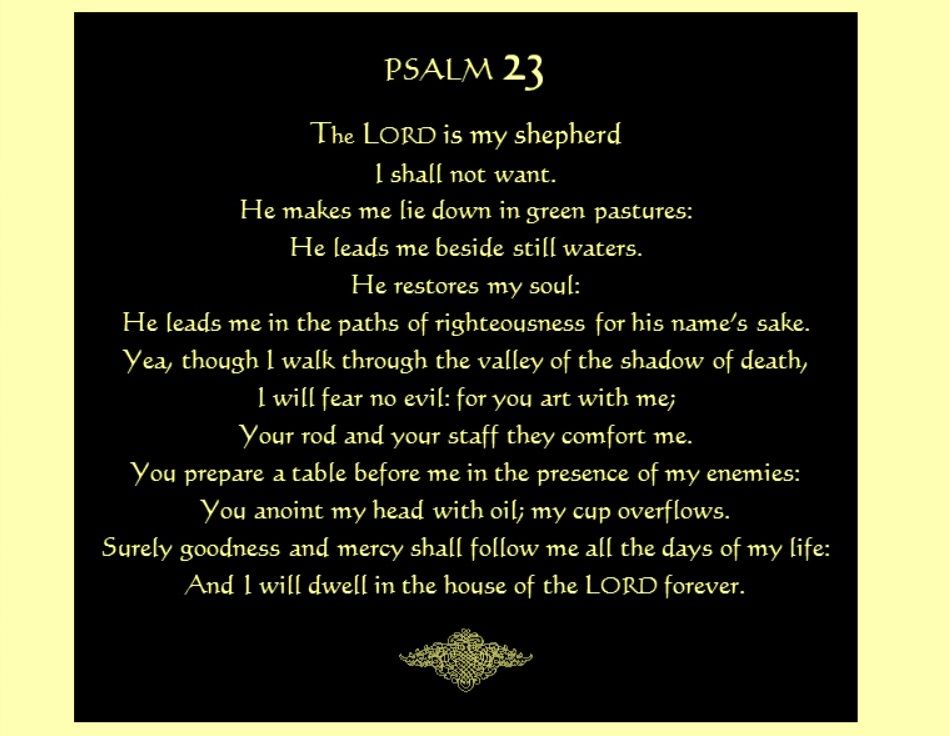
Psalm 23: The Shepherd Who Provides All We Need
Psalm 23
The well-loved hymn, Psalm 23, is an exquisitely beautiful expression of the confidence and strength by which believers are able to walk through any darkness they encounter.  New Testament Scripture expands and enhances the Psalm’s meaning, offering in a sense an interpretive commentary.

1 The LORD is my shepherd; I shall not want.

Matthew 5: 6. Blessed are they which do hunger and thirst after righteousness: for they shall be filled.

John 6: 35. And Jesus said unto them, I am the bread of life: he that comes to me shall never hunger; and he that believes me shall never thirst.

2 He makes me to lie down in green pastures: he leads me beside the still waters. 

John 10: 9. I am the door: by me if any man enter in, he shall be saved, and shall go in and out, and find pasture.

Luke 8: 24, 25. And they came to him, and awoke him, saying, Master, master, we perish. Then he arose, and rebuked the wind and the raging of the water: and they ceased, and there was a calm. And he said unto them, Where is your faith? And they being afraid wondered, saying one to another, What manner of man is this! for he commands even the winds and water, and they obey him.

3 He restores my soul: he leads me in the paths of righteousness for his name’s sake.

Matthew 11: 29, 30. Take my yoke upon you, and learn of me; for I am meek and lowly in heart: and ye shall find rest unto your souls. For my yoke is easy, and my burden is light.

4 Yea, though I walk through the valley of the shadow of death, I will fear no evil: for you art with me; your rod and your staff they comfort me.

Luke 1: 79. To give light to them that sit in darkness and in the shadow of death, to guide our feet into the way of peace.

5 You prepare a table before me in the presence of mine enemies: you annoint my head with oil; my cup runs over.

John 16: 23. These things I have spoken unto you, that in me you might have peace. In the world you shall have tribulation: but be of good cheer; I have overcome the world.

6 Surely goodness and mercy shall follow me all the days of my life: and I will dwell in the house of the LORD forever.

John 14:26, 27. But the Comforter, which is the Holy Ghost, whom the Father will send in my name, he shall teach you all things, and bring all things to your remembrance, whatsoever I have said unto you. Peace I leave with you, my peace I give unto you: not as the world gives, give I unto you. Let not your heart be troubled, neither let it be afraid.


Matthew 28:20b. and, lo, I am with you always, even unto the end of the world. 

AMEN.

Sunday, March 29, 2015

Bible Jesus Paul Damascus and Goads

1 Corinthians 15: 56-67
The Bible, Jesus Christ, 
Saint Paul on the Road to Damascus and Goads

Blog post by Mary Katherine May

But Simon Peter answered Him, "Lord, to whom shall we go? You have the words of eternal life. (John 6:68 NKVJ).  In these two beautiful, simple sentences Peter spoke profoundly what every professing Christian should echo.  Christ is all and in all.  Peter also declares that the words spoken by Jesus represent him. 
~I am the Bread of Life. (John 6)~Take my yoke upon you, and learn from me; for I am gentle and humble in heart, and you will find rest for your souls. (Matthew 11)~I am the Way, the Truth and the Life. No one comes to the Father except through me. (John 14)
 Later, when Peter contradicted himself in the courtyard of the high priest after professing that he would never deny Christ, the rude awakening was devastating.  He hadn’t lived up to what he said. 

Our words and actions represent who we are at our very core.  As Christians, they do even more because they represent the Lord whom we profess.  What we say in our daily walk can either reveal or reject.  Johann Heerman over 300 years ago spoke eloquently from his heart when he wrote, Who was the guilty?  Who brought this upon thee?  Alas, my treason, Jesus, hath undone thee!  ‘Twas I, Lord Jesus, I it was denied thee; I crucified thee.

Today after wondering about it for a long time I decided to take a look at the word GOAD as used in the Holy Bible. Being a city person, there is no good reason for me to know what a goad is.  Living in a suburb of Minneapolis, when would I have need of a stick with a sharp, pointed end used to prod animals like cows into moving along?

In the King James Version of the Holy Bible goad (Strong’s Concordance H1861) is used twice, both in the Old Testament. In 1 Samuel 21 the goads, along with coulters, axes, forks and mattocks were being sharpened to be used as weapons in battle.  The second Scripture using goad, Ecclesiastes 12:11, is related to New Testament text.

King James Version
11 The words of the wise are goads, and as nails fastened by the masters of assemblies, which are given from one shepherd.  12 And further, by these, my son, be admonished: of making many books there is no end; and much study is a weariness of the flesh.  13 Let us hear the conclusion of the whole matter: Fear God, and keep his commandments: for this is the whole duty of man.  14 For God shall bring every work into judgment, with every secret thing, whether it be good, or whether it be evil.

English Standard Version
11 The words of the wise are like goads, and like nails firmly fixed are the collected sayings; they are given by one Shepherd.  12 My son, beware of anything beyond these.  Of making many books there is no end, and much study is a weariness of the flesh.  13 The end of the matter; all has been heard.  Fear God and keep his commandments, for this is the whole duty of man.   14 For God will bring every deed into judgment, with every secret thing, whether good or evil.

Acts 9:5 and Acts 26:14
In the New Testament, however, there has been some discrepancy in usage of goad, due to loose interpretation and text sources.  Most Bible translations do not include goads in Acts 9:5 because of the consensus opinion that it was added by Erasmus in his 1516 translation. The entire text added by Erasmus here is, it is hard for thee to kick against the pricks. And he trembling and astonished, said, Lord, what wilt thou have me to do? And the Lord said to him,

Where goad is found, and it is in some but not all translations, is in Acts 26:14.  I quote the New King James Version followed by the King James Version.

Acts 26:14 NKJV: “And when we all had fallen to the ground, I heard a voice speaking to me and saying in the Hebrew language, ‘Saul, Saul, why are you persecuting Me? It is hard for you to kick against the goads.’ 15 “So I said, “Who are You, Lord?’ And He said, ‘I am Jesus, whom you are persecuting.

Acts 26:14 KJV: And he said, Who art thou, Lord? And the Lord said, I am Jesus whom thou persecutest: it is hard for thee to kick against the pricks.

In the language of today a goad would be the object used and a prick would be the result of the action by the object.  Were the meanings of goad and prick the same in 1611 when the KJV was introduced?  The standard, reliable references we have help a great deal in understanding what the Lord wants us to know.

from Strong’s Concordance
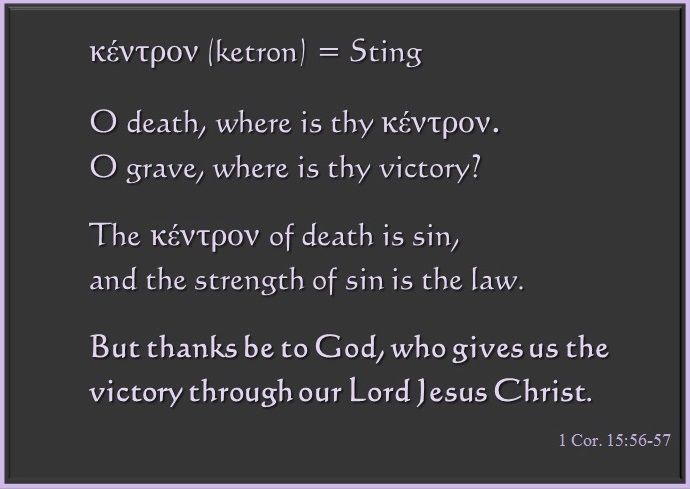
G2759 κέντρον (ketron)
Neuter noun. 1 a sting, as that of bees, scorpions, locusts. Since animals wound by their sting and even cause death, Paul attributes death, personified as a sting, i.e. a deadly weapon. 2 an iron goad, for urging on oxen, horses and other beasts of burden 2.1 hence the proverb, “to kick against the goad”, i.e. to offer vain and perilous or ruinous resistance (italics added)

From Vine’s Expository Dictionary of the New Testament Words (G2759) Goad: from kenteo, “to prick,” denotes (a) “a sting,” Rev. 9:30; metaphorically, of sin as the “sting” of death, 1 Cor. 15:55, 56; (b) “a goad,” Acts 26:14, RV, “goad” (marg., “goads”), for AV, “pricks” (in some mss. Also in Acts 9:5), said of the promptings and misgivings which Saul of Tarsus had resisted before conversion.

Before I conclude it will benefit to look at three other Scripture passages where ketron is used, as follows.  All three verses translate ketron into English by using the word sting.

1 Corinthians 15:55 KJV O death, where is thy sting? O grave, where is thy victory?

1 Corinthians 15:56 KJV The sting of death is sin; and the strength of sin is the law.

Revelation 9:10 KJV And they had tails like unto scorpions, and there were stings in their tails; and their power was to hurt men five months.

Jesus asked Saul, why are you persecuting Me? It is hard for you to kick against the goads.  Going against Jesus, fighting who He is and what He taught, denying Christ’s divinity is fighting a losing battle.  Jesus tells Saul that he is hurting only himself.  It is no different that if a cowherd were to stand with a goad pointing out with a cow deliberately walking into it and stabbing itself.

Returning to the Ecclesiastes text as reference point, I will note that the goads, the words of the wise, are given by one shepherd.  Ultimately there is only one source of wisdom that matters, despite how much anyone reads. Bucking up against the Word of Life, Jesus Christ, has a negative impact.  It is a poisonous sting that leads to spiritual death, separated from the Lord, from Heaven and from eternity. 

How does that relate to us living now?  No doubt that our actions and words, i.e. our sin, that deny Jesus Christ, the one Shepherd of Life are goads that prick and sting even unto death.  Great Lent is a time for reflection, and thinking on what goads—i.e. teachings of Christ and Christ himself—we are fighting against is time well spent.

Saturday, March 28, 2015

Sunday of the Passion Palm Sunday Pascha Suffering, Strong G3958

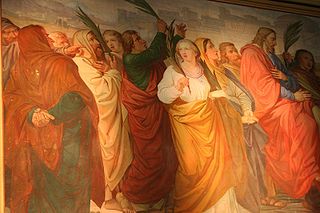
Entry of Jesus into Jerusalem
Art: Fresco in the parish church of Zirl, Austria
Soure: Wikipedia
Blog post by Mary Katherine May

Easter 2015: April 5, 2015 (Gregorian)

Easter 2015: April 12, 2015 (Julian)

As most Christians who follow the Gregorian calendar being the Holy Week with the Sunday of the Passion please remember that this day is much more than waving palms but instead is the beginning of events leading to the walk along the Via Dolorosa, the Way of the Cross to Golgotha.   There is no freedom from sin through Christ's resurrection but by His suffering and death on the cross. For Orthodox Christians who follow the Julian calendar this week begins on April 5 with Easter on April 12. 


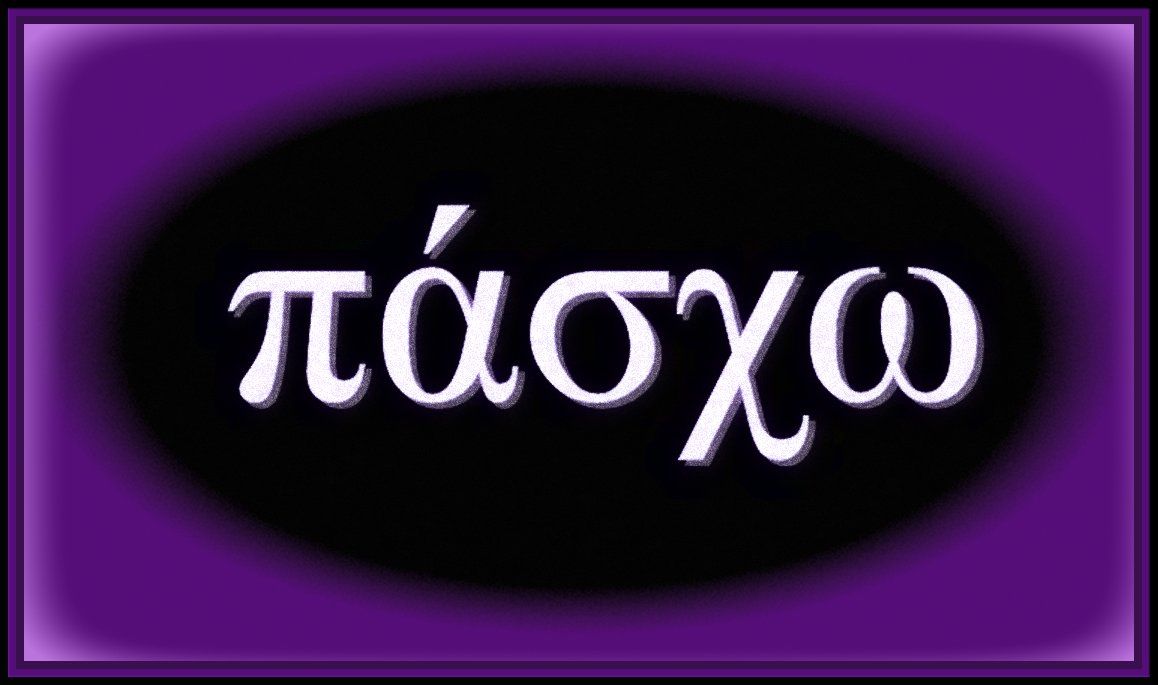
Greek: Pascho = Passion


Strong's Concordance for the King James Version (KJV) of the Holy Bible tells us that the word pascho means to be affected or have been affected, too feel, have a sensible experience, to undergo, in either a good sense or in a bad sense. 
Acts 1:3 KJV. To whom also he shewed himself alive after his passion by many infallible proofs, being seen of them forty days, and speaking of the things pertaining to the kingdom of God.
We can readily conclude without hesitatioin that what involves passion in this sense in much more that a fuzzy warm feeling or a time of being a little down in the dumps.  Neither is this passion related to a specific intimate experience in the manner of feeling passionate towards someone.

Strong's G3958 as used in the KJV New Testament is a physical experience and not a reactionary emotion.  This passion has to do with suffering, even to death.  It is in this case the experience of the cross.  Below is the list of Scripture verses that use G3958.  Other Bible versions when using other words for pascha other than passion and suffer, if a good translation, will have related synonyms that make sense. Click Here to go to BlueLetterBible.org, my source for this information.

Matthew 16:21, 17:12, 17:15, 27:19
Mark 5:26, 8:31, 9:12
Luke 9:22, 13:2, 17:25, 22:15, 24:26
Acts 3:18, 9:16, 17:3, 28:5
1 Corinthians 12;26
2 Corinthians 1:6
Galatians 3:4
Philippians 1:29
1 Thessalonians 2:14
2 Thessalonians 1:15
2 Timothy 1:12
Hebrews 2:18, 5:8, 9:26, 13:12
1 Peter 2:19, 2:20, 2:21, 2:23, 3:14, 3:18, 4:1, 4;15, 4:19, 5:10
Revelation 2:10

Eastern Orthodox Christians have a preference for calling the day of resurrection of our Lord and Savior Jesus Christ, Pascha.  OrthodoxWiki.org offers the following explanation.

Pascha, also called Easter, is the feast of the Resurrection of the Lord.  Pascha is a transliteration of the Greek word, which is itself a transliteration of the Hebrew pesach, both words meaning Passover. 
Pascha normally falls either one or five weeks later than the feast as observed by Christians who follow the Gregorian calendar. However, occasionally the two observances coincide, and on occasion they can be four weeks apart. The reason for the difference is that, though the two calendars use the same underlying formula to determine the festival, they compute from different starting points. The older Julian calendar's solar calendar is 13 days behind the Gregorian's and its lunar calendar is four to five days behind the Gregorian's.  LINK


Tuesday, March 24, 2015

Bald Eagles One Sunny Day in Southern Wisconsin 13 March 2015


Along the Great River Road, State Trunk Hwy. 35, BALD EAGLES can be seen in Southwest Wisconsin in the bluff area along the Mississippi River especially during the month of March as they migrate north when the ice is melting and there is open water. A bridge will take Eagle watchers into Wabash, Minnesota to the National Eagle Center where the majestic bald eagle can be seen up close and personal. Photographing eagles is difficult because they maintain distance, mostly by height, and I do my best with the equipment I have. Obviously the capability of the camera lens one has makes a big difference. The images here were taken at a small park on the Mississippi River in Bay City, Wisconsin.

Sunday, March 22, 2015

10 Christian Quotes by Watchman Nee

12 Christian Quotes by Watchman Nee
from Twelve Baskets Full Volumes 1, 2 and 3
blog post by Mary Katherine May of QualityMusicandBooks.com

1. I: page 37. Permanent satisfaction can only come when we discover that Christ is the Bread of life and learn to draw on him ceaselessly for sustenance.

2. I: page 59. Please bear in mind that however much of the Word of God you may have acquired intellectually, and however powerfully you may be able to expound it, it will never become truly yours until you have allowed the Cross to operate in relation to it.

3. I: page 73. The unsaved soul can know no permanent gladness of heart because the burden of sin rests upon him; but the Christian, who has come to Christ and has received pardon and cleansing, does not necessarily find the Christian life to be the joyous experience he looked for. Why is he so often disillusioned? Because, though he has dropped his sin-burden at the foot of the Cross, he has not learned to cast all his burdens on the Lord and the burden of daily cares weighs him down so that the joy is banished from his life.

4. II: page 11. The conditions basic to all ministry that can be truly called ministry to the Lord are: drawing near to Him and standing before Him.

5. II: page 13. There are only two types of sin before God. One is the sin of rebelling against His commands, i.e., refusing to obey when He issues orders. The other is the sin of going ahead when the Lord has not issued orders. The one is rebellion; the other is presumption.

6. II: page 86. There are two aspects of the Spirit’s government. The one is, to order our affairs in such a way that through His circumstantial dealings with us we come to a point where we offer our willing obedience. The other is that, even when we have no intention to obey, His activity in our lives makes good what we lack so that despite our unwillingness, we become obedient.

7. II: page 107. Brothers and Sisters, you ask why He saved you. Let me tell you that He saved you because it was His delight to save you.

8. III: page 21. To sum up, we should yield obedience to the authority of the Lord, enjoy the life of the Body and at the same time supply life to other members. These are the three main principles of our living in the Body of Christ.

9. III: page 40. What is the significance that the Church has become the kingdom of priests? It means that all who are saved by the grace of God have only one profession, that is to serve God. Before a person believes in God, he may be a doctor, a nurse, a teacher or a merchant. After being saved, such a person has only one principal vocation of serving God though he may continue to carry on in his own profession. Formerly, one wishes to distinguish himself in his career, to be an outstanding person in his profession. Now, such ambitions are shattered and the only avowed vocation is to serve the Lord and all other activities must be submitted to this end.

10. III: page 92. The two biggest facts in history are these: all our sins were dealt with by the Blood, and we ourselves were dealt with by the Cross.

Twelve Baskets Full by Watchman Nee

Monday, March 16, 2015

Wisconsin Bluffs Old Indian Warrior Do You See What I See

What do you see? 
Blog Post by Mary Katherine May
There are times when rock formations have designs carved by weather and time that seem familiar to us. The glacial rock along the St. Croix River, for example, has its Old Man of the Dalles, Holy Cross, Lion's Head, and more.  

In this case the rock is sandstone which is far more changeable due to the elements (as far as I know).

This past weekend as we drove along the Mississippi River bluffs in Wisconsin I snapped photos. Looking at them this evening I saw something, and maybe you will, too.

I see the configuration of the face of an old American Indian warrior looking down as though watching and guarding the land and people below. 

Wisconsin Bluffs: Old Indian Warrior (enhanced)
Wisconsin Bluffs: Old Indian Warrior (original)
Wisconsin Bluffs: Old Indian Warrior photo enhanced)
Wisconsin Bluffs: Old Indian Warrior (original)

Thursday, March 12, 2015

Saint John Chrysostom Quote on Forgiveness from Homily 19 on The Lord's Prayer

Commentary on the Sermon on the Mount
Saint John Chrysostom
Homily 19: On the Lord's Prayer
This blog post by Mary Katherine May
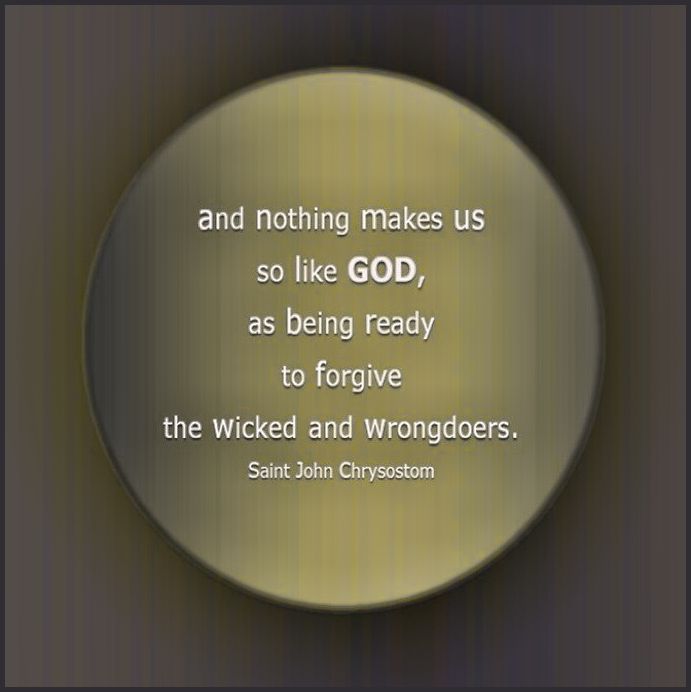
Quote on Forgiveness by John Chrysostom
And nothing makes us so like God, as being ready to forgive the wicked and wrongdoers; even as indeed He had taught before, when He spoke of  His "making the sun to shine on the evil and the good."

Audio Format Link
Commentary by John Chrysostom on the Sermon on the Mount from the Gospel of Matthew, chapters 5 through 7, can be downloaded or listened to online at no charge at LibriVox.org. 
LINK to commentary at LibriVox.org

Text Format Link
Commentary on the Sermon on the Mount Homily 19: The Lord's Prayer by John Chrysostom is available for online reading by CLICKING HERE.


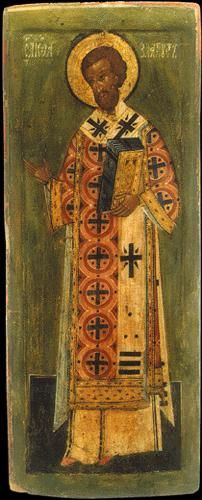
Icon of Saint John Chrysostom
source link
About John Chrysostom
LINK to OrthodoxWiki article on John Chrysostom
Our father among the saints John Chrysostom (347-407), Archbishop of Constantinople, was a notable Christian bishop and preacher from the fourth and fifth centuries in Syria and Constantinople. 

He is famous for eloquence in public speaking, his denunciation of abuse of authority in the Church and in the Roman Empire of the time, and for a divine liturgy attributed to him. 

He had notable ascetic sensibilities. After his death he was named Chrysostom, which comes from the Greek, meaning golden-mouthed

LINK  to recording on YouTube : Divine Liturgy of St. John Chrysostom set to music by Sergei Rachmaninov (op. 31)