Sunday, March 22, 2015

10 Christian Quotes by Watchman Nee

12 Christian Quotes by Watchman Nee
from Twelve Baskets Full Volumes 1, 2 and 3
blog post by Mary Katherine May of QualityMusicandBooks.com

1. I: page 37. Permanent satisfaction can only come when we discover that Christ is the Bread of life and learn to draw on him ceaselessly for sustenance.

2. I: page 59. Please bear in mind that however much of the Word of God you may have acquired intellectually, and however powerfully you may be able to expound it, it will never become truly yours until you have allowed the Cross to operate in relation to it.

3. I: page 73. The unsaved soul can know no permanent gladness of heart because the burden of sin rests upon him; but the Christian, who has come to Christ and has received pardon and cleansing, does not necessarily find the Christian life to be the joyous experience he looked for. Why is he so often disillusioned? Because, though he has dropped his sin-burden at the foot of the Cross, he has not learned to cast all his burdens on the Lord and the burden of daily cares weighs him down so that the joy is banished from his life.

4. II: page 11. The conditions basic to all ministry that can be truly called ministry to the Lord are: drawing near to Him and standing before Him.

5. II: page 13. There are only two types of sin before God. One is the sin of rebelling against His commands, i.e., refusing to obey when He issues orders. The other is the sin of going ahead when the Lord has not issued orders. The one is rebellion; the other is presumption.

6. II: page 86. There are two aspects of the Spirit’s government. The one is, to order our affairs in such a way that through His circumstantial dealings with us we come to a point where we offer our willing obedience. The other is that, even when we have no intention to obey, His activity in our lives makes good what we lack so that despite our unwillingness, we become obedient.

7. II: page 107. Brothers and Sisters, you ask why He saved you. Let me tell you that He saved you because it was His delight to save you.

8. III: page 21. To sum up, we should yield obedience to the authority of the Lord, enjoy the life of the Body and at the same time supply life to other members. These are the three main principles of our living in the Body of Christ.

9. III: page 40. What is the significance that the Church has become the kingdom of priests? It means that all who are saved by the grace of God have only one profession, that is to serve God. Before a person believes in God, he may be a doctor, a nurse, a teacher or a merchant. After being saved, such a person has only one principal vocation of serving God though he may continue to carry on in his own profession. Formerly, one wishes to distinguish himself in his career, to be an outstanding person in his profession. Now, such ambitions are shattered and the only avowed vocation is to serve the Lord and all other activities must be submitted to this end.

10. III: page 92. The two biggest facts in history are these: all our sins were dealt with by the Blood, and we ourselves were dealt with by the Cross.

Twelve Baskets Full by Watchman Nee

Monday, March 16, 2015

Wisconsin Bluffs Old Indian Warrior Do You See What I See

What do you see? 
Blog Post by Mary Katherine May
There are times when rock formations have designs carved by weather and time that seem familiar to us. The glacial rock along the St. Croix River, for example, has its Old Man of the Dalles, Holy Cross, Lion's Head, and more.  

In this case the rock is sandstone which is far more changeable due to the elements (as far as I know).

This past weekend as we drove along the Mississippi River bluffs in Wisconsin I snapped photos. Looking at them this evening I saw something, and maybe you will, too.

I see the configuration of the face of an old American Indian warrior looking down as though watching and guarding the land and people below. 

Wisconsin Bluffs: Old Indian Warrior (enhanced)
Wisconsin Bluffs: Old Indian Warrior (original)
Wisconsin Bluffs: Old Indian Warrior photo enhanced)
Wisconsin Bluffs: Old Indian Warrior (original)

Thursday, March 12, 2015

Saint John Chrysostom Quote on Forgiveness from Homily 19 on The Lord's Prayer

Commentary on the Sermon on the Mount
Saint John Chrysostom
Homily 19: On the Lord's Prayer
This blog post by Mary Katherine May
Quote on Forgiveness by John Chrysostom
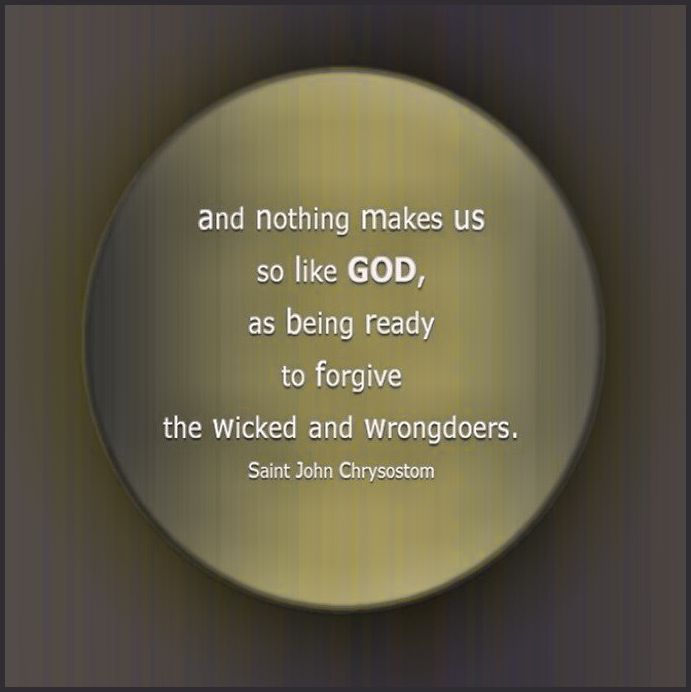
And nothing makes us so like God, as being ready to forgive the wicked and wrongdoers; even as indeed He had taught before, when He spoke of  His "making the sun to shine on the evil and the good."

Audio Format Link
Commentary by John Chrysostom on the Sermon on the Mount from the Gospel of Matthew, chapters 5 through 7, can be downloaded or listened to online at no charge at LibriVox.org
LINK to commentary at LibriVox.org

Text Format Link
Commentary on the Sermon on the Mount Homily 19: The Lord's Prayer by John Chrysostom is available for online reading by CLICKING HERE.


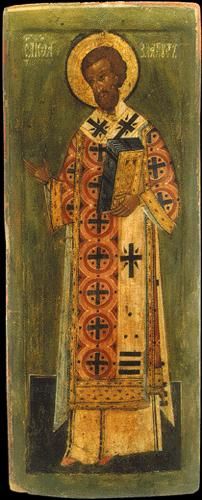
Icon of Saint John Chrysostom
source link
About John Chrysostom
LINK to OrthodoxWiki article on John Chrysostom
Our father among the saints John Chrysostom (347-407), Archbishop of Constantinople, was a notable Christian bishop and preacher from the fourth and fifth centuries in Syria and Constantinople. 

He is famous for eloquence in public speaking, his denunciation of abuse of authority in the Church and in the Roman Empire of the time, and for a divine liturgy attributed to him. 

He had notable ascetic sensibilities. After his death he was named Chrysostom, which comes from the Greek, meaning golden-mouthed

LINK  to recording on YouTube : Divine Liturgy of St. John Chrysostom set to music by Sergei Rachmaninov (op. 31)

Wednesday, March 11, 2015

Jesus Christ Caiaphas Sacred Oath of Testimony

From the Upper Room to the Empty Tomb
William Evans, Ph.D., D.D.
Grand Rapids MI: Wm. B. Eerdmans Publishing Company, 1934
Chapter 5: The Trial of Jesus
2. The Ecclesiastical Trial—Before Annas, Caiaphas and the Sanhedrin

Pages 165-169

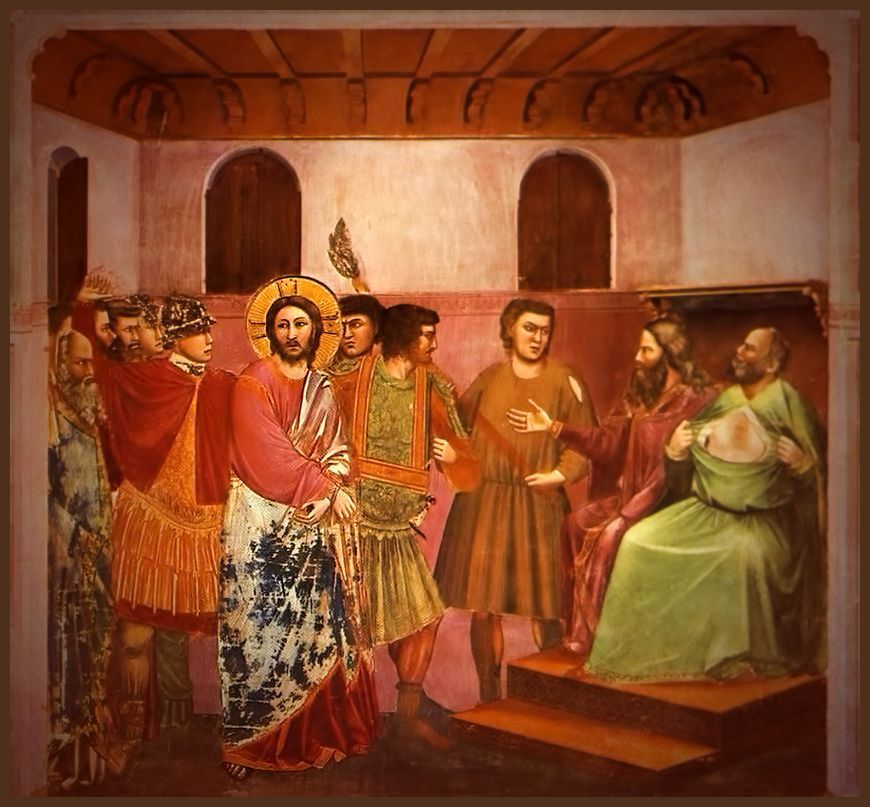
Christ Before Caiaphas by Giotto di Bondone (1267-1337)
Source: Wikipedia Link to Image
image edited by Mary Katherine May
The Sacred Oath of Testimony
Author William Evans explains two reasons for the death of Jesus according to the purposes of Rome and the Jewish authorities and not the same as the real purpose according to God which of course at the time they would not have known.

The following small excerpt from Evan's book will perhaps be an insight into the real events leading up to the the empty tomb not realized or thought of before as it wasn't for me.  

The question Caiaphas asked of Jesus was framed in a way to require or necessitate a response other than silence.  It was the defining moment from which there was no escaping death.

The committed Christian, in order to be named as committed, has already had one such moment, which is not the same as knowing you are a Christian.  It is the moment that has led from a worldly or sinful life to death on the cross with Jesus Christ and then on to a life of resurrection and light.  

Christians now as ever before, however, are coming to another defining moment. This moment, if it comes, is each for each of us accompanied with a sacred oath of testimony in the same manner as Jesus faced before Caiaphas.  What would my answer be? What would your answer be?  That is something to think about.

Excerpt from The Upper Room to the Empty Tomb
“The Christ,” “the Messiah” of the Jews, was related not only to the spiritual blessings that would come on the people of God when He came; He also was to be, at least in the mind and calculation of the people (although certainly not according to the true interpretation of their Scriptures), a ruler, a king, a military commander who would deliver His people from the galling yoke of the oppressor.  Here then was a conception of the Messianic office that would be of keenest interest in Rome.  It was this aspect of the case that interested Pilate: “Art thou a king then?”  The thing which perhaps more than aught else moved Pilate to give up Jesus to the Jews for His crucifixion was the saying of leaders of the Jews: “If thou let this man go thou art not Caesar’s friend; whosoever maketh himself a king speaketh against Caesar.”  “When Pilate therefore heard that saying, he brought Jesus forth and sat down (or set him down) in the judgment seat…and saith unto the Jews, Behold your King…Shall I crucify your King? The chief priests answered, We have no king, but Caesar.” (John 19:14-16)

The cunning of the high priest, therefore, was shown in his illegal attempt to wring from Jesus the confession that He was the “Messiah,” “the Christ,” for by so doing His doom would be sealed and made sure by both Jewish and Roman authorities—by the Sanhedrin and by Pilate.  Here was both a religious and political crime punishable with death.

But to exact a confession from the accused in order that he might condemn himself was a violation of Jewish law which clearly said: “Our law condemns no one to death on his own confession”….”It is a fundamental principle with us that no one can damage himself by what he says in judgment.”  That this was teaching of the Mishna, the controlling Jewish law, the high priest well knew.  But what was law to him and the Sanhedrin seeing they were determined to put Jesus to death?  There was nothing else for them to do, if they were to accomplish their nefarious purpose, but to ignore their own laws of justice and human rights.  Caiaphas will cowardly resort to a most holy custom; he will have recourse to the “Sacred Oath of the Testimony.”

When Caiaphas had asked Jesus whether or not He had anything to say in reply to the things which were being testified against Him, “Jesus held His peace;” He made no reply; and, in spite of all his persuasion, Caiaphas could not make Jesus speak; He continued to remain silent.  It was then that the high priest determined to resort to one of the most holy customs of the Jews, one which Jesus, being a true and holy Jew, would not dare disobey.  He would apply to Jesus “The Sacred Oath of Testimony” under which a true Jew dared not remain silent.  The Mishna says: “If one shall say, I adjure you by the Almighty, by Sabaoth, by the Gracious and Merciful, by the Longsuffering, by the Compassionate, or by any of the divine titles, behold they are bound to answer.”  It is clear, then, in the face of this sacred oath, that no pious Jew would dare to remain silent, for silence under such circumstances was practically an unforgiveable offense.  Jesus, therefore, could not remain any longer silent; as a true and pious Jew He must answer this question of the high priest.

“And the high priest arose, and said unto him, Answerest thou nothing? what is it that these witness against thee?  But Jesus held His peace.  And the high priest answered and said unto him, I adjure thee by the living God that thou tell us whether thou be the Christ, the Son of God.  Jesus said unto him, Thou hast said; nevertheless I say unto you, Hereafter shall ye see the Son of Man sitting on the right hand of power, and coming on the clouds of heaven.  Then the high priest rent his clothes, (and, this in direct disobedience to the divine command that the high priest should ‘not rend his clothes,’ Lev. 10:6) saying, He hath spoken blasphemy; what further need have we of witnesses: behold now ye have heard his blasphemy, What think ye? They answered and said, He is guilty of death.” (Matt. 26:62-66)

To this question, “Art thou the Christ?” administered under the “Sacred Oath of Testimony,” Jesus answered in the affirmative: “I am;” “Thou hast said;” “Ye say that I am.”  (Mark 14:62; Matt. 26:64; Luke 22:70)  Being compelled, under oath, to say, what was truth, that He was the Messiah, His answer was as simple as possible, “Thou sayest.”  Let us not think for a moment that Jesus, by these simply expressed affirmations, is seeking to evade the issue by giving an ambiguous answer to the question of the high priest.  He is not.  The answer is, according to Jewish custom and under such circumstances as these, a most positive and an affirmative answer.  It certainly was so regarded by the high priest and those who were present in the courtroom.  There was certainly no doubt in their minds as to the meaning of Jesus’ answer.  This was no word of an overwrought enthusiast, a deluded person.  It was absolute, definite, positive and affirmative to them, being of such a nature as to constitute “blasphemy.” (Matt. 26:65)  According to Jewish law and custom, courtesy, under these circumstances, forbade a direction “Yes” or “No” to a question of such grave or sad import.

It is quite true that the interpretation which the high priest put upon the title “the Christ” was quite different from that which the Scriptures give it, and Jesus Himself put upon it, nevertheless there was nothing else for Jesus to do but to acknowledge that He was “the Christ” foretold in the Jewish Scriptures.  According to the true interpretation of the office and function of the Messiah, His work was to be characterized by accomplishing the spiritual redemption and deliverance of God’s people.  The high priest, in common with the Jewish nation as a whole, had misunderstood and misinterpreted the Messianic function and referred it to a material, physical and political deliverance from all temporal enemies (see Acts 1:6; cf. Luke 17:20, 21)—and it was such a definition that lay back in the mind of the scheming high priest.  But Jesus, of course, was not responsible for this false conception of the Messianic office, and could not, on that account, deny that He was the true Messiah, the Christ of God.

But this admission of Jesus as to His being “the Christ” satisfied the high priest because, on the one hand, it constituted blasphemy, and such a claim, in the judgment of the Sanhedrin, was a crime punishable by death; while, on the other hand, the thought that Caesar’s throne was threatened by a Jewish Messiah would be sufficient to constitute treason which was a crime punishable by death by Rome, for Rome looked for trouble in connection with the advent of the Jewish Messiah, and had already had one or two very serious political clashes with men professing to be the Christ, the Messiah; (Acts 5:36, 37; 21:38; 8:9) so Rome would be taking no more risks in that direction.

Jesus, therefore, by His own confession, had condemned Himself religiously and politically.  And this was exactly what the scheming Caiaphas wished for.  The Sanhedrin would quickly take care of the crime of blasphemy and sentence Jesus to death for it.  Rome would not be slow in taking cognizance of any, even seeming, attack upon its control of the Jewish nation.  As long as Jesus was content to remain as a mere local preacher among the people of Palestine Rome would not need to bother about Him, but let Him make claim to be the Messiah, who, according to Jewish belief, is destined to mount the throne of David—well, that was an entirely different matter; then Rome was interested and seriously so.

Before the Sanhedrin Jesus was condemned because they said He claimed to be the Son of God; before Pilate because they said He claimed to be the King of the Jews; so we should understand that the crucifixion was the crucifixion of one who claimed to be God’s Son in a manner which was equivalent to equality with God.  Nor was it necessarily called blasphemy because the Messiah said He was the Son of God (the Jews expected that), but because Jesus made the claim in an exclusive way.  He had said, “that God was his own Father, thus making Himself equal with God.” (John 5:17, 18 R.V.)  Indeed the death on the cross can be understood only as we see these two things.

This blog post by Mary Katherine May of QualityMusicandBooks.com.

Monday, March 9, 2015

Listening to Your Heart Immersing Yourself in Scripture of the Holy Bible

This blog post by Mary Katherine May.

Psalm 103:1 New King James Version of the Holy Bible
Today almost from the first thing in the morning I was thinking about a Psalm text that is used at every Eastern Orthodox Divine Liturgy.
Bless the Lord, O my soul: and all that is within me, bless his holy name...
In my humble opinion, as Christians in prayer and meditation three things happen. Some will say that there is a particular order to how this is done and maybe even quantify how much of each is supposed to take place.  It seems to me that what happens will be in relation to the day and what is taking place. 

1. Praising God.
2. Presenting needs and burdens we carry for others and ourselves.
3. Listening to what God is saying.

One way we listen to God is through immersing ourselves in Scripture. This means more than reading a verse, a passage, or a book once through and closing the cover.  That would be no different than preparing for a class by reading an assigned text once through, giving it no further thought, and then expecting a perfect score on the exam. If I did this I would be fortunate not to fail.

What God has to say to us, what He wants us to know and learn, is far more important than any school subject.  What God has to say is vital to our spiritual growth and health.

When God puts a thought into my mind to go to a particular place in the Bible, or if in reading Scripture something pulls me into the text, I will read it over and over until it seems time to move on--there may be a deeper understanding of the message.  Often I am surprised or thrilled to be reading on something that pertains exactly to what I am experiencing in life.

God is good.  
Amen.

Sunday, March 8, 2015

Whose Sins Did Jesus Bear on the Cross A Thought for Lent

A Thought for 8 March 2015
This blog post by Mary Katherine May

When Jesus the Messiah died on the cross He bore the weight of all sin for all time and that includes the sins of the worst enemies of humanity. God is all love and cannot hate as we do--God's wrath is about justice which is not the same as hate. 

If God can love these evil people who have no humanity left can I do any less? Life is only a brief moment but eternity in Hell is torment without respite for all time. Though but a foretaste of what is to come salvation brings those who believe into the Kingdom of God now, and this is our peace. 

It is a lot easier to hate and be angry than it is to understand and have sorrow for the most evil humanity in the world.  Only through God's love in us are we able to say at any time what Christ said as He hung on the cross, "Father, forgive them, for they know not what they do."

Jesus Christ in Matthew 5:22 tells us that anger without just cause is the same as murder, and so it is essential for the Christian what a just cause, or a righteous anger is.  For this I would refer to those more knowledgeable than myself, but I would note that anger which boils over into an out of control, consuming outrage is unhealthy and self-destructive, turning the bearer of such anger into that which the outrage is directed.

Grant me, Lord, a heart not consumed by hate but instead that I may have a heart filled with sorrow for the lost and justice for those who have been wronged. In the Name of the Father, the Son, and the Holy Spirit. One God. Amen.

Wednesday, February 25, 2015

Western Powers Obama John McCain and the People of Ukraine

It Is the People of Ukraine NOT the Country but the People
This blog post by Mary Katherine May of QualityMusicandBooks.com

Today I point to an article in the Moscow Times: If U.S. Arms Ukraine, Russia Could Arm Iran.

The chilling truth is that the people of Ukraine--not the country, the people--are not important enough to the powers of the west except as a tool for its own purpose. 

No arms because of oil. No arms because of the Iran negotiations that the O wants so desperately to complete. No arms because it might anger Putin. Sad to say as throughout history the people of Ukraine--not the country, but the people--are inhuman bargaining chips in this sick game of politics. John McCain speaks the truth and is put down. 

What makes this possible? A lack of humanity, compassion, an understanding of the value of human beings.  People matter.  I believe that there is a way to achieve goals without making humanity expendable.  The people in power who can act evidently do not or are not willing to work hard enough to figure it out.

This makes me literally sick.

Monday, February 23, 2015

St. Vincent: Love Thy Neighbor

This editorial remark by Mary Katherine May of QualityMusicandBooks.com.

WRONG: This movie is supposed to be funny, and because it is supposed to be funny it demonstrates how low the morality to which many in Hollywood have sunk. I do not understand a parent who would allow a child to act in a movie with this type of subject matter. An adult taking a 12 year old boy to a strip club, dive bar and other places in not funny. It is child abuse.

I have not watched this movie and have no plans to do so.  Based upon the "funny" promotional description, decision was easily made.

Friday, February 13, 2015

13 Timely Inspirational Christian Quotes Louis Evely

Our Prayer by Louis Evely
New York: Herder and Herder, 1970
13 Timely Christian Quotes from the book Our Prayer by Louis Evely
 New York: Herder and Herder, 1970
1.  What actually happens is that God proposes and man disposes. God is pure proposal, calling, grace: Behold, I stand at the door and knock; if anyone hears my voice and opens the door,  I will come in to him and eat with him, and he with me(Rev. 3:20).

2.  Prayer is listening to God’s prayer to us.

3.  God loves us equally, as much as we allow ourselves to be loved, as far as we open ourselves to his love. He beckons everyone, but forces no one. (p.10)

4.  God wants to enter into the most lively and affectionate relationship possible with each one of us; he is limited only by our refusal. (p. 11)

5.  You do not even have to look for God.  If you do, you will never find him, because he is never anywhere other than where you are. (p. 11)

6.  Idolatry is not a specialty of primitive civilizations—it is a modern industry: we are idol factories.  If one could extract all our false ideas about God from our brains and collect them together, one would have the finest ethnographic museum in the world, a fantastic collection of totems, taboos and demons. (p. 37)

7.  God made man in his image and likeness and now we have gone and done the same to him!  (p. 37)

8.  A Christian is someone who witnesses to the fact that God has spoken to him. (p. 62)

9.  God is not omnipotent in the way we think—that is, in the way we should like to become omnipotent.  He is omnipotence of love, not of force. (p. 91)

10.  By making man free God deliberately limited himself. (p. 94)

11.  You cannot understand the world if you seek to find the reflection of God’s will in it; but it all becomes clear if you see the consequences of man’s will in it. (p. 95)

12.  We believe that God intervenes without cease, but in keeping with his nature as revealed in Jesus Christ, respecting the laws he has established and the liberty with which he has endowed us.  (p. 104)

13.  We live in an order of grace, which is of freedom, not subjection.  God constantly shows himself, but by signs of love, not acts of power. (p. 104)

This blog post created by Mary Katherine May of QualityMusicandBooks.com.


Tuesday, February 3, 2015

12 Inspirational Christian Quotes John H McGoey SFM

The Sins of the Just
Fr. John H. McGoey, S.F.M., author
Milwaukee: Bruce Publishing Company, 1963
12 Inspiring Christian Quotes from The Sins of the Just
John H. McGoey, S.F.M.*, author
Milwaukee WI: Bruce Publishing Company, 1963

Imprimi potest.  Nihil obstat.  Imprimatur.**

The Sins of the Just was written for Roman Catholic women both considering the religious life and those living within a religious order as nun.  Covering many aspects of everyday life within the religious community there is also good practical application for Christian readers living in the world.

In one sense, though on a much broader scale, all Christians are separated from the world spiritually, being as Christ taught, in the world but not of the world its many challenges of not succumbing to the temptation of joining in worldly ways.  

Sins of the Just was published just over 60 years past, yet the truths contained are still relevant and worthy of thought.  Used copies and print-on-demand of the book are available online through many book sites, as well as in libraries.  

Quotes by Fr. John H. McGoey, S.F.M.
Inspiring quotes for thought and inspiration
1 Mastering self is a hard process.  Spiritual exercises do not develop the soul as physical exercises do the body. Holiness sought begets pride oftener than union with god.  Time in religion cannot be equated with spirituality nor does it make sanctity inevitable.

2  Living for God is much more than avoiding blasphemy and other serious offenses against Him.  It is giving one’s life to God in very deed. 

3  Legal spirituality creates the theology of minimums.  The fulfillment of the least required amount, doing the bare necessities, establishing the lowest average for entering the Kingdom of Heaven, seeking to have one’s cake and eat it too—these are the factors in the theology of minimums. 

4  Many of the most effective fighters of modern war re not in uniform; they are heroes whose only insignia is bravery and their willingness to be forgotten in the victory they hope for. 

5  Tradition is sacred but it is not infallible.  If it were, Christopher Columbus would have died sitting on a dock in Genoa staring out into what was then considered space. 

6  Curiosity was given man by God so that he would seek knowledge through which he would learn more about even God himself. 

7  Love for truth demands great courage, for the truth reveals many unpleasant facts which will be faced only by the brave. 

8  Fearlessness comes from practice.  It comes from having gone into the valley of death and having come out alive; from having died to self and learned to live to God.  

9  Courage is only the refusal to be victimized by the emotion of fear or deprived of union with God by anticipation of its demands.

10  Tyranny is marked by intolerance of criticism.  Where there is freedom there is criticism as surely as where there is sun there is warmth.

11  There is only one sane reason for condemning criticism: the poor judgment of the critic.  But even criticism must be heard before it can be condemned.

12  The emotions are very useful.  They act like amber traffic lights.  These lights are not meant as a threat but as a safeguard to life, making a certain amount of time available for the though and action required to me the situation they reveal. 

*S.F.M., or Scarboro Foreign Mission SocietyScarboro Missions is a Society of Canadian Catholics, priests and laity, motivated by the Spirit, who dedicate themselves to the person, teaching and mission of Jesus Christ as expressed in his words, I have come that they may have life and have it to the full (John 10:10).  LINK to Scarboro Foreign Mission Society website.

**Imprimi potest, Latin for it can be printed, is a declaration by a major superior of a Roman Catholic religious institute that writings on questions of religion or morals by a member of the institute may be printed.  Superiors make such declarations only after censors charged with examining the writings have granted the nihil obstat, a declaration of no objection. Final approval can then be given through the imprimatur, let it be printed, of the author's bishop or of the bishop of the place of publication. (source: Wikipedia.org). 

Friday, January 30, 2015

Samuel Lover The Dream Valley of the Shadow of Death Jesus Waiting

Samuel Lover
A Selection from Samuel Lover's Last Composition
The Dream.
Samuel Lover’s Last Composition
It has been my habit for a long time, that, amongst the private prayers I address to God before going to rest, this passage has always been present: “Whenever it shall be Thy pleasure to call away Thy unworthy servant, may Thy rod and Thy staff comfort me through the Valley of the Shadow of Death!”  Never had that prayer been more fervently made than on the evening of the 21st of May, 1868, in Jersey, when I knelt down by the bedside.

In the middle of the night, or rather Friday morning, the 22d, I had a dream. 

I thought I had entered the Valley of the Shadow.

It was a deep gorge and narrow, and high cliffs, on either hand, rendered it also dark and shadowy, and as the valley lay before me, further in advance, still deeper and darker it grew, till, in the extreme distance, all form was lost, and nothing but intense darkness prevailed.

Just then, relieved upon that background of gloom, suddenly I saw Jesus Christ, in wondrous radiance, surrounded by sheep.

I woke the moment my senses were impressed with this lovely, glorious, faith-inspiring vision; and oh! what a comfort it was to me thus to wake!  My bodily suffering, even, was relieved, when my poor soul was thus strengthened.

It seemed to me as if my prayer, made that night, had been heard and granted by my merciful and gracious God, and that I need not fear the Valley of the Shadow of Death, where Christ Himself was waiting to care for the sheep.

Source: Samuel Lover: A Biographical Sketch and Selections from His Writings and Correspondence by Andrew James Symington. London: Blackie and Son, 1880.

This blog post created by Mary Katherine May of QualityMusicandBooks.com.

Wednesday, January 28, 2015

A Word Picture of Salvation and Forgiveness from St Macarius the Egyptian

image source: Wikipedia
A Word Picture of Salvation and Forgiveness 
from St. Macarius the Egyptian
Fifty Spiritual Homilies: Homily 27
A.J. Mason, D.D.
London: Society for Promoting Christian Knowledge, 1921

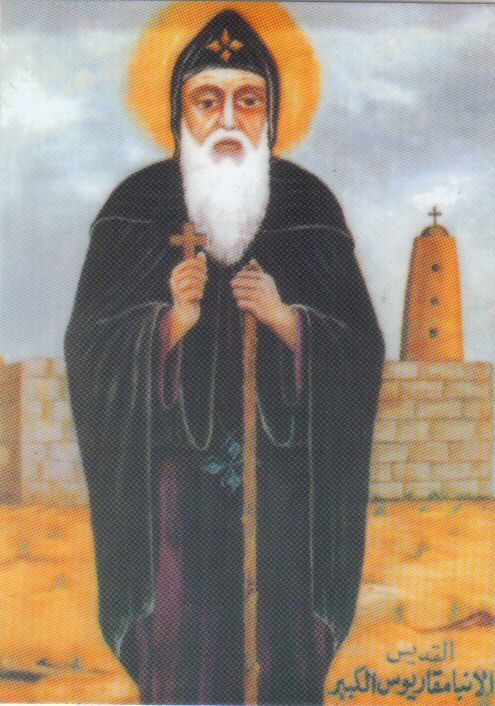
St. Abba Macarius the Great (295-392 A.D.), also known as Macarius the Egyptian, was among the most influential Desert Fathers of Egypt, and a disciple of St. Anthony the Great.

From Homily 27 as Told by A.J. Mason
Suppose a king were to find a poor maiden, clothed in rags, and were not ashamed, but took away her soiled clothes, and washed off her blackness, and adorned her with splendid clothes, and made her a partner of the king, and gave her a share of his table and the banquet ; so did the Lord find the soul wounded and stricken, and gave her medicine, and took off her the black garments and the disgrace of sin, and clothed her with royal, heavenly garments, the garments of the Godhead, all shining and glorious, and put a crown upon her, and made her a partaker of the royal table for joy and gladness. And as when there is a pleasure garden, and it has there fruit trees, and all sweet-smelling ones, and there are there many charming spots, all lovely and filled with fragrance and refreshment, and whoever goes there is delighted and refreshed ; so are the souls in the kingdom, all in joy, delight, and peace.

Homily 27 Told in Today's English by Mary Katherine May 
with Related Bible Verses

Isaiah:  61:10 NKVJ
I will greatly rejoice in the LORD,
My soul shall be joyful in my God;
For He has clothed me with the garments of salvation,
He has covered me with the robe of righteousness,
As a bridegroom decks himself with ornaments,
And as a bride adorns herself with her jewels.

Suppose a king were to find a poor girl wearing only dirty rags. He didn’t think it was beneath his dignity to help her but instead took away her soiled clothes, washed off the dirt and grime, and dressed her in splendid garments.  In his court he made her equal to himself, and seated her at his table at the banquet. 

Revelation 3:5 NKJV  He who overcomes shall be clothed in white garments, and I will not blot out his name from the Book of Life; but I will confess his name before My Father and before His angels.   Psalm 23:5 NKJV  You prepare a table before me in the presence of my enemies; You anoint my head with oil; My cup runs over.

Just so did the Lord find the soul wounded and stricken, and gave her medicine, and took off her the black garments and the disgrace of sin, and clothed her with royal, heavenly garments, the garments of the Godhead, all shining and glorious, and put a crown upon her, and made her a partaker of the royal table for joy and gladness.

Psalm 23: 2, 3a NKJV  He makes me to lie down in green pastures. He leads me beside still waters. He restores my soul.

And as when there is a beautiful garden with sweet smelling fruit trees with many places filled with fragrant scents and views that revive soul and body, and whoever goes there is delighted and refreshed.  So are the souls in the kingdom, all in joy, delight, and peace.

Sources
The Homilies of St. Macarius the Great are available as an online public domain work through archive.org and other online sites free audio reading on librivox.org, as well as books in print both old and new, and many public libraries.

Read about The Monastery of St. Macarius the Great founded in the fourth century by the saint himself and still in use today. Here during restoration of the monastery begun in 1969 the crypts of St. John the Baptist and Elisha the Prophet were discovered.

Read about the life of St. Macarius by clicking the link that goes to the Orthodox Church of America website.

Read by clicking here about how Egyptian government officials invaded the monastery in 2010 injuring several monks over a land dispute.

This blog post by Mary Katherine May of QualityMusicandBooks.com.  The content of this blog post by St. Macarius and Mary Katherine May is available free for nonprofit use. Scripture verses from the New King James Version of the Holy Bible are subject to copyright restrictions of the copyright holder.

Saturday, January 24, 2015

13 Relevant Quotes from Francis Bacon in Bacon's Essays

Bacon's Essays
Thirteen Relevant Quotes from Bacon's Essays
Francis Bacon, First Viscount St. Alban (1561-1626)
Pitt Press Series, Alfred S. West [editor], 1897

This blog post by Mary Katherine May of QualityMusicandBooks.com.

Of Truth
1. But I cannot tell: Truth is a naked and open day light that does not show the masks and mummeries, and triumphs of the world, half so stately and daintily as candlelight.

2. For a lie faces God, and shrinks from man.

3. Surely the wickedness of falsehood and breach of faith cannot possibly be so highly expressed, as in that it shall be the last summons to call the judgments of God upon the generations of men; It being foretold that, when Christ comes, He shall not find faith upon the earth.

Of Death
4. Men fear death as children fear to go in the dark.

Of Revenge
5. Certainly, in taking revenge, a man is but even with his enemy; but in passing it over, he is superior.  (Proverbs 19:11 The discretion of a man makes him slow to anger, and his glory is to overlook a transgression. NKJV)

6. This is certain: That a man that studies revenge keeps his own wounds green, which otherwise would heal and do well.

7. The virtue of adversity is fortitude; which in morals is the more heroic virtue.

8. We see in needlework and embroidery it is more pleasing to have lively work upon a dark and solemn background than to have a dark and melancholy work upon a light background. Judge, therefore, of the pleasure of the heart by the pleasure of the eye.

9. For prosperity does best bring to light vice, but adversity does best bring to light virtue.

Of Envy
10. A man that has no virtue in himself always envies virtue in others. For men’s minds will either feed upon their own good or upon the evil in others. And who wants the one will prey upon the other; and who is out of hope to attain to another’s virtue will seek to be even with him by trying to ruin him.

Of Great Place (High Office)
11. Men in high office are three times servants: servants of the sovereign or state; servants of reputation; and servants of business: so that they have no freedom, neither in their persons, nor in their actions, nor in their times.  It is a strange desire, to seek power and to lose liberty; or to seek power over others and to lose power over a man’s self.  The rising unto high office is laborious, and by pains men come to greater pains; and it is sometimes base, and by the indignities that men come to dignities.

Of Atheism
12. It is true that a little philosophy inclines man’s mind to atheism; but depth in philosophy brings men’s minds round to religion.

13. For none deny there is a God but those for whose advantage it would be that there were no God.

Saturday, January 17, 2015

Hymn I Am Coming to the Cross

Today's offering is the hymn I Am Coming to the Cross recorded by Donald Nelson with harmony and piano by me-Mary Katherine May.  As a Christian I am reminded that coming to the cross is not a one-time event, but a daily necessity. Praise God, from whom all blessings flow!

Thursday, January 15, 2015

Jesus Christ Icon of God

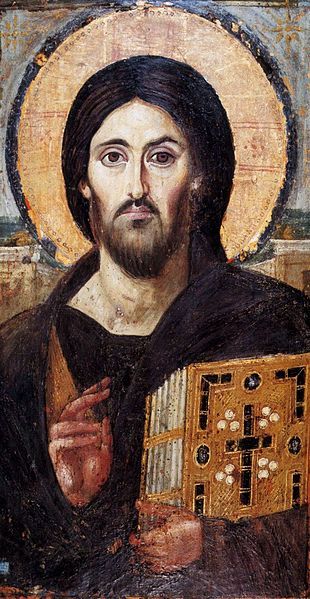
Sixth Century Icon of
Christ Pantocrator
Jesus Christ the Icon of God
This blog post by Mary Katherine May of QualityMusicandBooks.com

An ICON is a representation of something or someone.  In today's world people who use computers and the internet will understand icons as symbols that when clicked bring up a site, program or file that the button or icon represents. For example, here on Google Blogger, the white B inside an orange square is its icon.  Facebook uses only the letter F.  

LINK to ICON definition on TheFreeDictionary.com.

Another type of ICON is an object or person that has come to represent something very important in life or history.  A good example is the Statue of Liberty which represents American freedom and hope.  What sums up this iconic landmark the best are the lines from The New Colossus, a poem written by Emma Lazarus in 1883.  
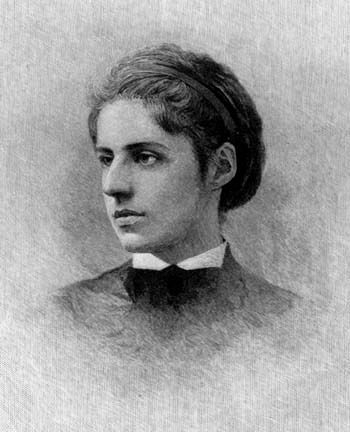
Emma Lazarus
Author of The New Colossus

Irving Berlin set the words to music for the 1949 musical, Miss Liberty.  Since that time these passionate words set in a sentimental fashion have been been sung and recorded countless times.  Click the LINK to hear the song sung by Sandi Patty with the Cincinnati Pops.

Give me your tired, your poor,
Your huddled masses yearning to breathe free,
The wretched refuse of your teeming shore.
Send these, the homeless, tempest-tossed to me,
I lift my lamp beside the golden door!


εκν prounced ICON
Saint Paul in his letter to the Colossians, chapter 1, verses 15 through 20, wrote an inspirational, beautiful description of our Lord and Savior, Jesus Christ, that beings thus:

The Son is the image of the invisible God, the first-born over all creation. 

Image is translated from the Greek word icon.  Strong's Lexicon defines icon as follows: 
1.2. the image of the Son of God, into which true Christians are transformed, is likeness not only to the heavenly body, but also to the most holy and blessed state of mind, which Christ possesses.

Jesus Christ testified himself to himself as the image or icon of God in the Gospel of John 14: 6, 7:  Jesus said to him, "I am the way, the truth, and the life.  No one comes to the Father except through me.  If you know me, you will know my Father also.  From now on you do know him and have seen him.

Jesus Christ is not a prophet nor is He only a wise man. I do not write was, I write the verb is in the present tense.  Jesus Christ who came to us in human form is the way, truth, and life meaning He is one with God and is God because to be the icon of God, the image of God he must be one with God.  

How then can we understand Scripture saying that Jesus as the image of God is the Icon of God in relation to the belief that icons are no different than graven images which God doesn't allow? One answer is that graven images have to do with idols that remove God from his place and first and only to be worshiped.  

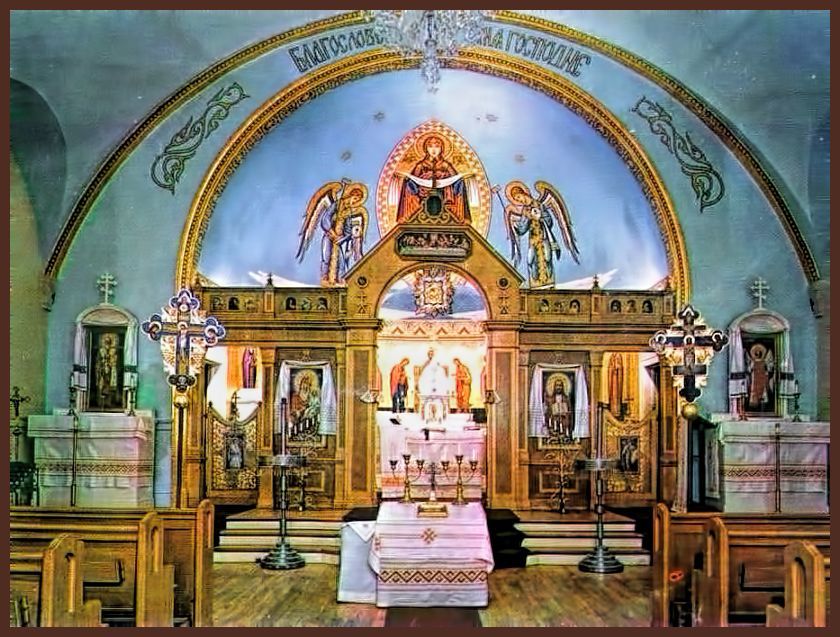
St. Michael's and St. George's Ukrainian Orthodox Church
Minneapolis, Minnesota
The use of icons dates back to the first centuries of Christianity.  I provide links for readers interested in learning more about the use of icons in the Christian Church.  

LINK to article by Dr. Zakaria Wahba titled Icons: Their History and Spiritual Signficance
LINK to article on the veneration of icons on the Korennaya Hermitage site.